Point and Interval Estimates of the Population Mean
393 播放时长:271
加载播放器...
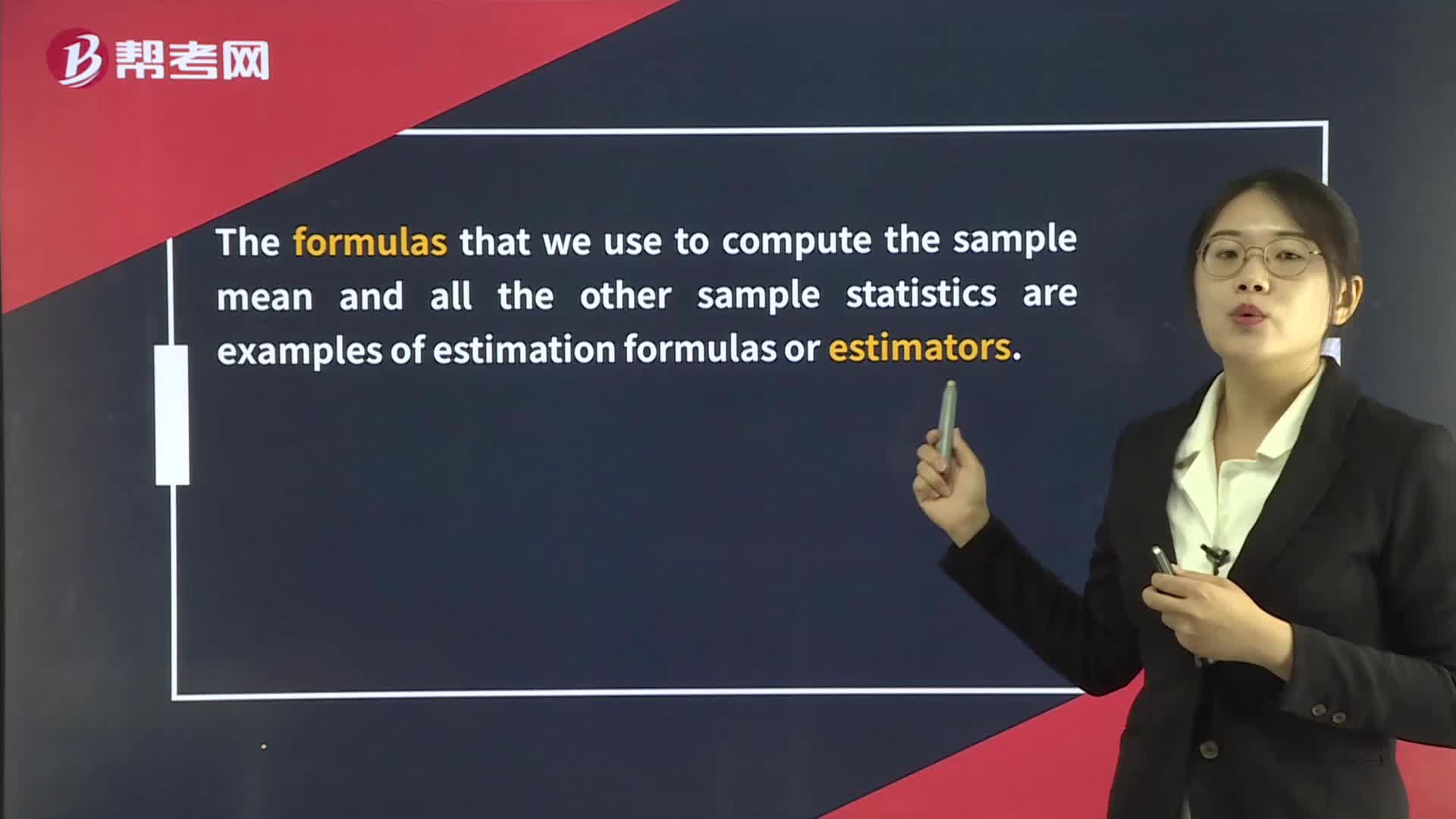
Mean,examples of estimation formulas or estimators.:distribution.:Efficiency.[PracticeC.
Point estimate of the population mean is a single value that is used to estimate the true mean of a population. It is typically calculated using sample data and is represented by the symbol $\bar{x}$.
Interval estimate of the population mean is a range of values that is used to estimate the true mean of a population. It is calculated using sample data and is represented by a confidence interval. A confidence interval is a range of values that is likely to contain the true mean of the population with a certain level of confidence. The level of confidence is typically expressed as a percentage (e.g., 95% confidence interval).
The formula for calculating a confidence interval for the population mean is:
$\bar{x} \pm z_{\alpha/2} \frac{s}{\sqrt{n}}$
where:
- $\bar{x}$ is the sample mean
- $z_{\alpha/2}$ is the z-score corresponding to the desired level of confidence (e.g., 1.96 for a 95% confidence interval)
- $s$ is the sample standard deviation
- $n$ is the sample size
The confidence interval represents the range of values within which the true population mean is likely to fall with a certain level of confidence. For example, a 95% confidence interval means that if we were to repeat the sampling process many times, 95% of the resulting confidence intervals would contain the true population mean.
CFA考试视频Point and Interval Estimates of the Population MeanCFA一级视频