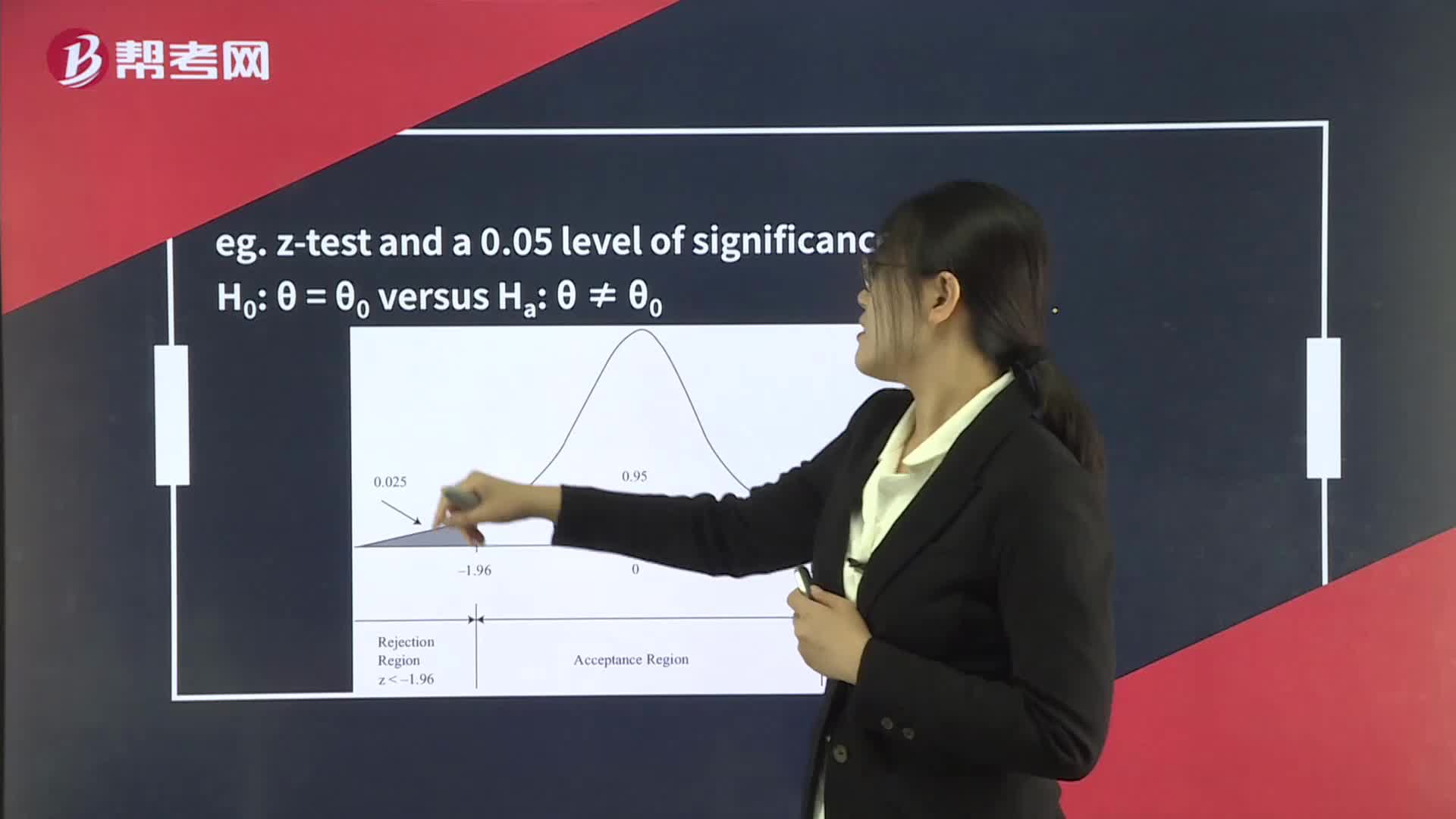
Rejection Point (Critical Value) for the Test Statistic
527 播放时长:300
加载播放器...
the result is not statistically significant at the 0.05 level.
The rejection point, also known as the critical value, is the value of the test statistic beyond which the null hypothesis is rejected. It is determined by the level of significance chosen for the test and the degrees of freedom associated with the test statistic. The rejection point is typically found using a statistical table or calculator.
For example, if conducting a t-test with a level of significance of 0.05 and 20 degrees of freedom, the rejection point would be ±2.093. If the calculated test statistic falls beyond this value, the null hypothesis would be rejected at the 0.05 level of significance.
For example, if conducting a t-test with a level of significance of 0.05 and 20 degrees of freedom, the rejection point would be ±2.093. If the calculated test statistic falls beyond this value, the null hypothesis would be rejected at the 0.05 level of significance.
CFA考试视频Rejection Point (Critical Value) for the Test StatisticCFA一级视频


