Statement of Changes in Equity
889 播放时长:283
加载播放器...
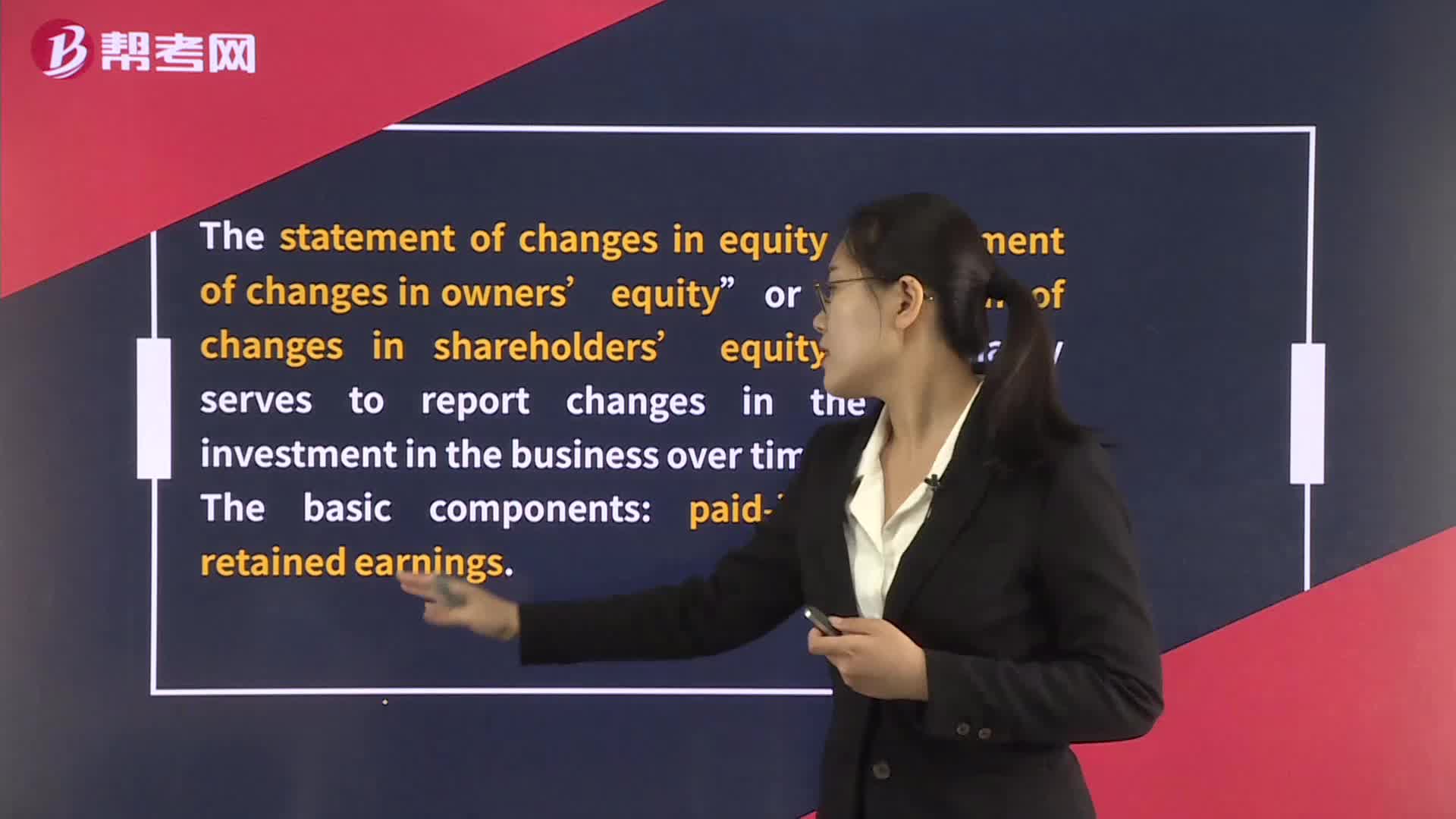
statement,in equity. The latter items may be shown separately or included in retained:capitalstockincomeconsolidated financial statements.
The statement of changes in equity is a financial statement that shows the changes in the equity of a company over a specified period of time. Equity represents the residual interest in the assets of a company after deducting liabilities. The statement of changes in equity shows the movement in the equity of a company during a period, which is usually a financial year.
The statement of changes in equity typically includes the following components:
1. Opening equity balance: This is the equity balance at the beginning of the period.
2. Net income or loss: This is the profit or loss for the period, which is calculated by subtracting expenses from revenues.
3. Other comprehensive income: This includes gains or losses that are not included in net income, such as foreign currency translation adjustments, changes in the fair value of investments, and gains or losses on cash flow hedges.
4. Transactions with owners: This includes any transactions with shareholders that affect equity, such as the issuance of new shares, the payment of dividends, and the repurchase of shares.
5. Closing equity balance: This is the equity balance at the end of the period, which is calculated by adding the opening equity balance, net income or loss, other comprehensive income, and transactions with owners.
The statement of changes in equity is useful for investors and analysts who want to understand how a company's equity has changed over time. It can also be used to calculate key financial ratios, such as return on equity, which measures the profitability of a company relative to its equity.
CFA考试视频Statement of Changes in EquityCFA一级视频


