Shifts in Aggregate Supply
396 播放时长:415
加载播放器...
In addition;shiftincludingcapitalresourcescapitalproductivity and technology.
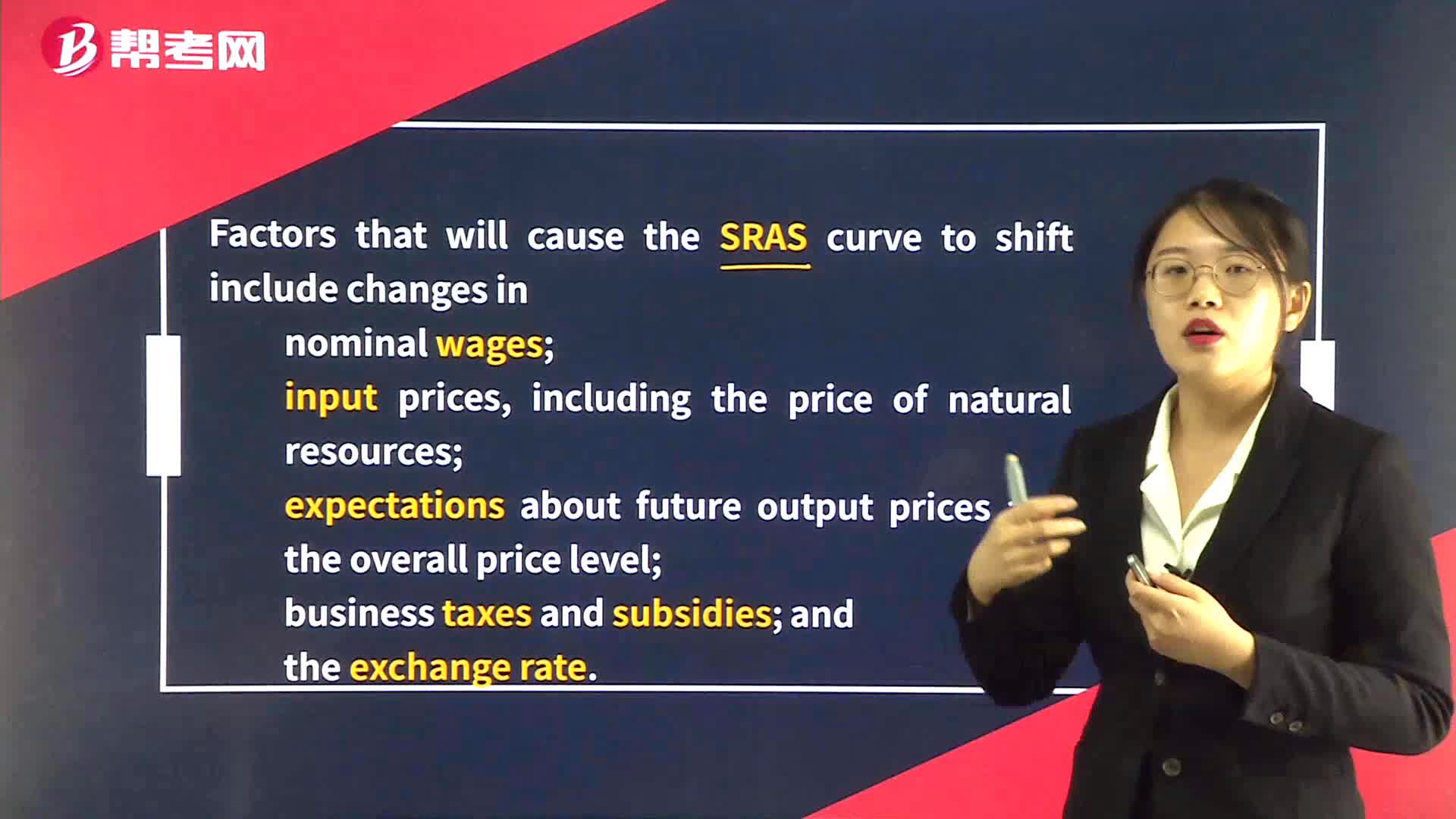
Aggregate supply refers to the total amount of goods and services that producers are willing and able to supply at a given price level. Shifts in aggregate supply occur when there is a change in the factors that affect the production of goods and services. These factors include:
1. Changes in input prices: An increase in the prices of inputs such as labor, raw materials, and energy will increase the cost of production and reduce the profitability of firms. This will lead to a decrease in aggregate supply.
2. Technological advancements: Improvements in technology can increase the productivity of firms, reduce the cost of production, and increase the profitability of firms. This will lead to an increase in aggregate supply.
3. Changes in taxes and regulations: An increase in taxes or regulations will increase the cost of production and reduce the profitability of firms. This will lead to a decrease in aggregate supply.
4. Changes in the availability of resources: A decrease in the availability of resources such as land, labor, and capital will reduce the productivity of firms and decrease aggregate supply.
5. Changes in the global economy: Changes in the global economy such as changes in exchange rates, trade policies, and economic growth rates can affect the demand for exports and the availability of imports. This can affect the profitability of firms and lead to a shift in aggregate supply.
Overall, shifts in aggregate supply can have significant impacts on the economy, including changes in output, employment, and prices.
CFA考试视频Shifts in Aggregate SupplyCFA一级视频