Technical Analysis Tools— Technical Indicators
540 播放时长:18
加载播放器...
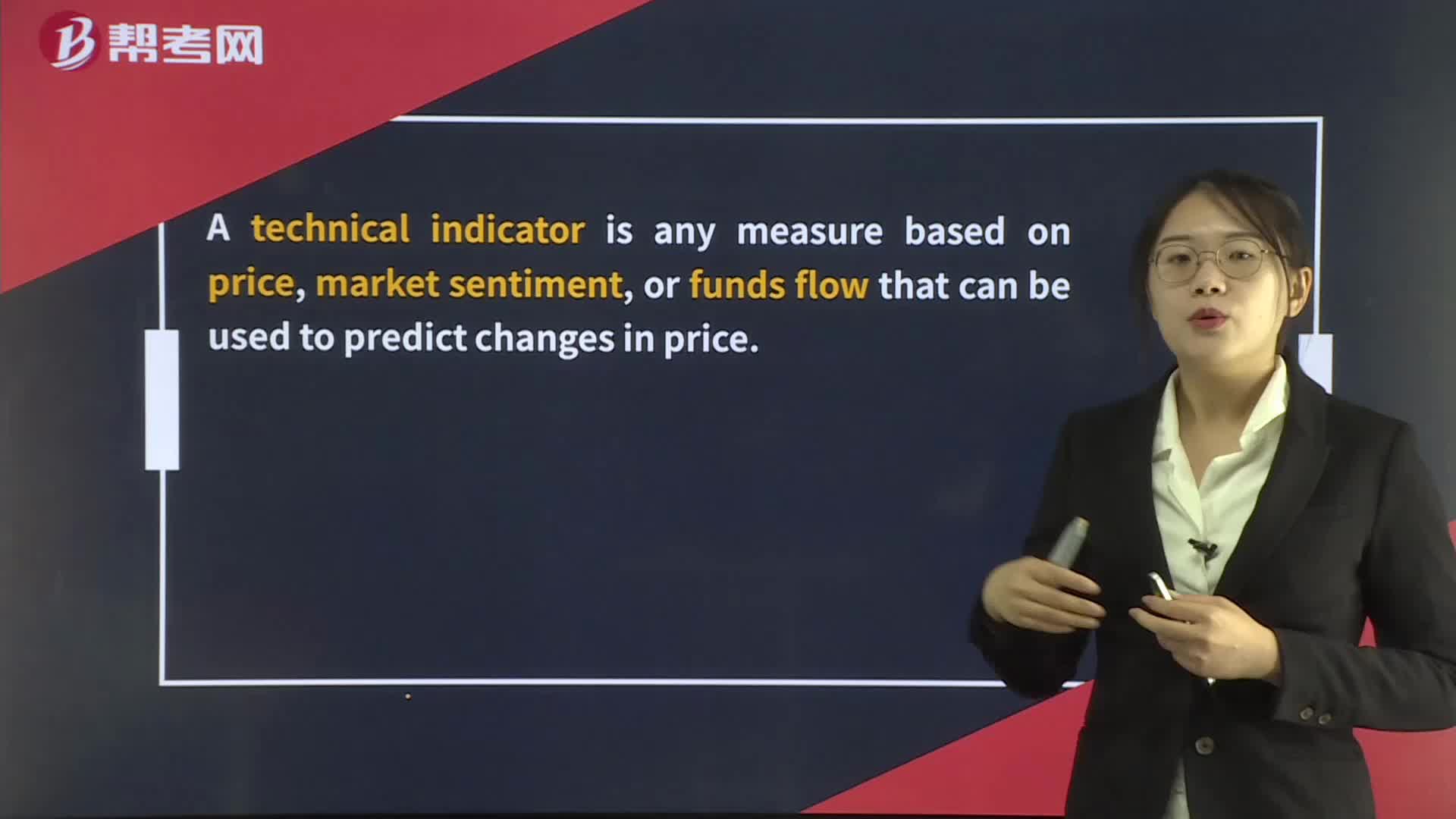
changes in price.
Technical indicators are mathematical calculations based on the price and/or volume of a security that provide insights into the market trends and potential future movements. These indicators can help traders and investors make informed decisions about buying or selling a security. Here are some of the most popular technical indicators:
1. Moving Averages: A moving average is the average price of a security over a certain period of time. It helps traders identify trends and potential reversal points.
2. Relative Strength Index (RSI): The RSI is a momentum indicator that measures the strength of a security's price action. It ranges from 0 to 100 and is used to identify overbought and oversold conditions.
3. MACD (Moving Average Convergence Divergence): The MACD is a trend-following momentum indicator that helps traders identify the direction of a trend and potential reversal points.
4. Bollinger Bands: Bollinger Bands are a volatility indicator that helps traders identify potential price breakouts or breakdowns. They are based on a security's moving average and standard deviation.
5. Fibonacci Retracement: Fibonacci retracement is a technical analysis tool that uses horizontal lines to indicate areas of support or resistance at the key Fibonacci levels before the price continues in the original direction.
6. Stochastic Oscillator: The stochastic oscillator is a momentum indicator that compares a security's closing price to its price range over a certain period of time. It helps traders identify potential reversal points.
7. Average Directional Index (ADX): The ADX measures the strength of a security's trend, regardless of its direction. It ranges from 0 to 100 and is used to identify potential trend reversals.
8. Ichimoku Cloud: The Ichimoku Cloud is a trend-following indicator that provides traders with a comprehensive view of a security's price action. It consists of multiple lines that help traders identify potential support and resistance levels.
These technical indicators can be used individually or in combination to analyze the market and make informed trading decisions. However, it is important to remember that no single indicator can predict market movements with 100% accuracy, and traders should always use multiple indicators and other analysis tools to confirm their trading decisions.
CFA考试视频Technical Analysis Tools— Technical IndicatorsCFA一级视频


