Supply Analysis in Monopolistic Competition
482 播放时长:56
加载播放器...
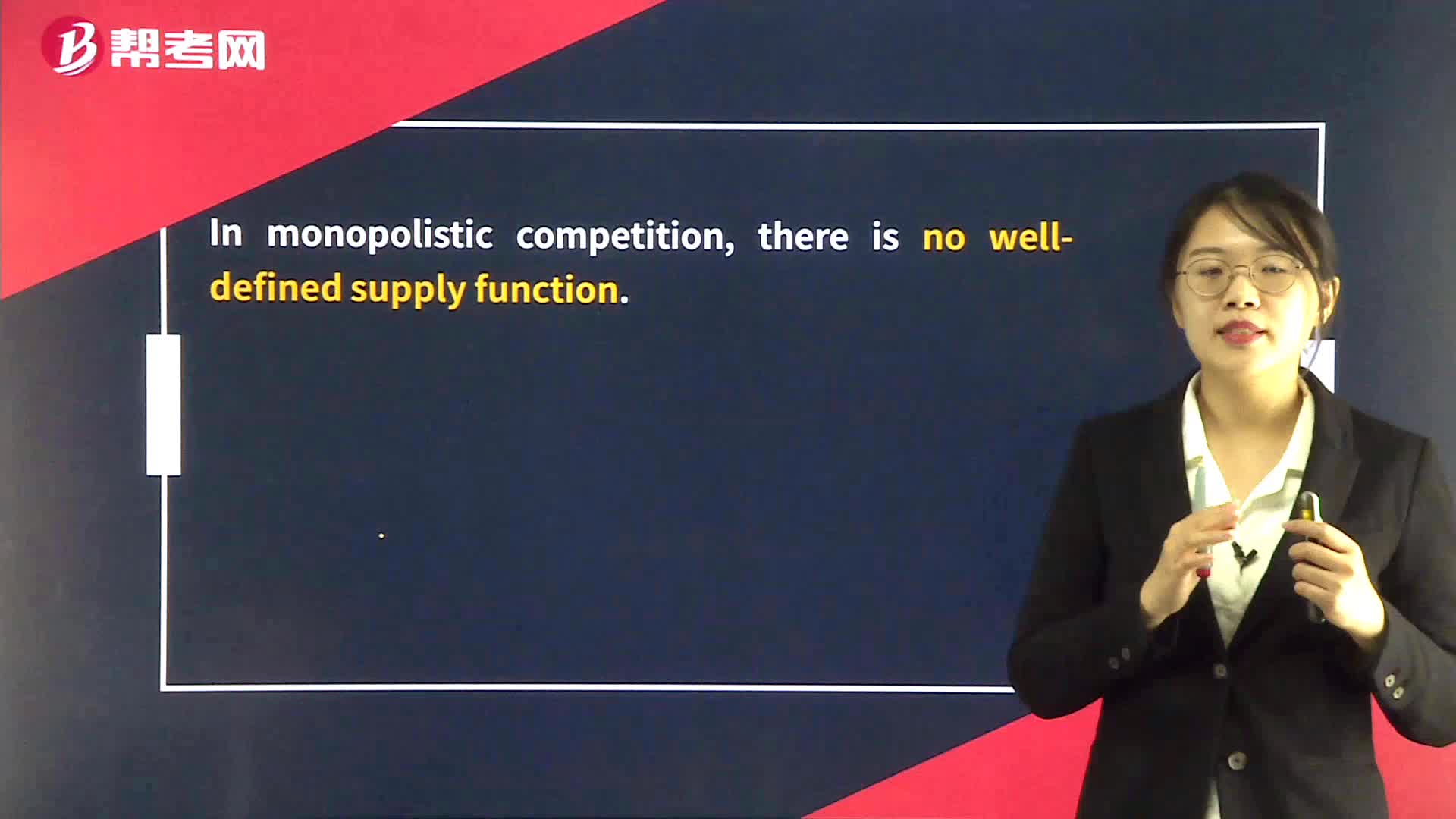
there is no well-defined supply function.
In monopolistic competition, firms have some degree of market power and can influence the price of their products. Therefore, the supply analysis in monopolistic competition is different from that in perfect competition.
1. Short-run supply: In the short-run, a firm's supply curve is upward sloping, indicating that it will supply more at higher prices. However, the extent to which the firm can increase its supply is limited by its capacity and production costs. If the market price is higher than the firm's average variable cost, it will continue to produce and supply in the short-run.
2. Long-run supply: In the long-run, firms can enter or exit the market. If the existing firms are earning profits, new firms will enter the market, increasing the supply and reducing the price. Conversely, if the existing firms are incurring losses, some firms may exit the market, reducing the supply and increasing the price. Therefore, in the long-run, the supply curve becomes more elastic as more firms enter the market.
3. Product differentiation: In monopolistic competition, firms differentiate their products to create a unique identity and gain a competitive advantage. Therefore, the supply of each firm's product is unique and cannot be easily substituted by another firm's product. This differentiation gives firms some degree of market power, allowing them to charge higher prices and earn profits.
4. Advertising: Firms in monopolistic competition spend a significant amount on advertising to create brand loyalty and differentiate their products. This expenditure increases the firm's costs and affects its supply decisions. If the advertising expenditure is high, the firm may need to charge a higher price to cover its costs, reducing its supply.
Overall, the supply analysis in monopolistic competition is influenced by the degree of product differentiation, advertising, and the entry and exit of firms in the market.
CFA考试视频Supply Analysis in Monopolistic CompetitionCFA一级视频