The Elasticities Approach
351 播放时长:534
加载播放器...
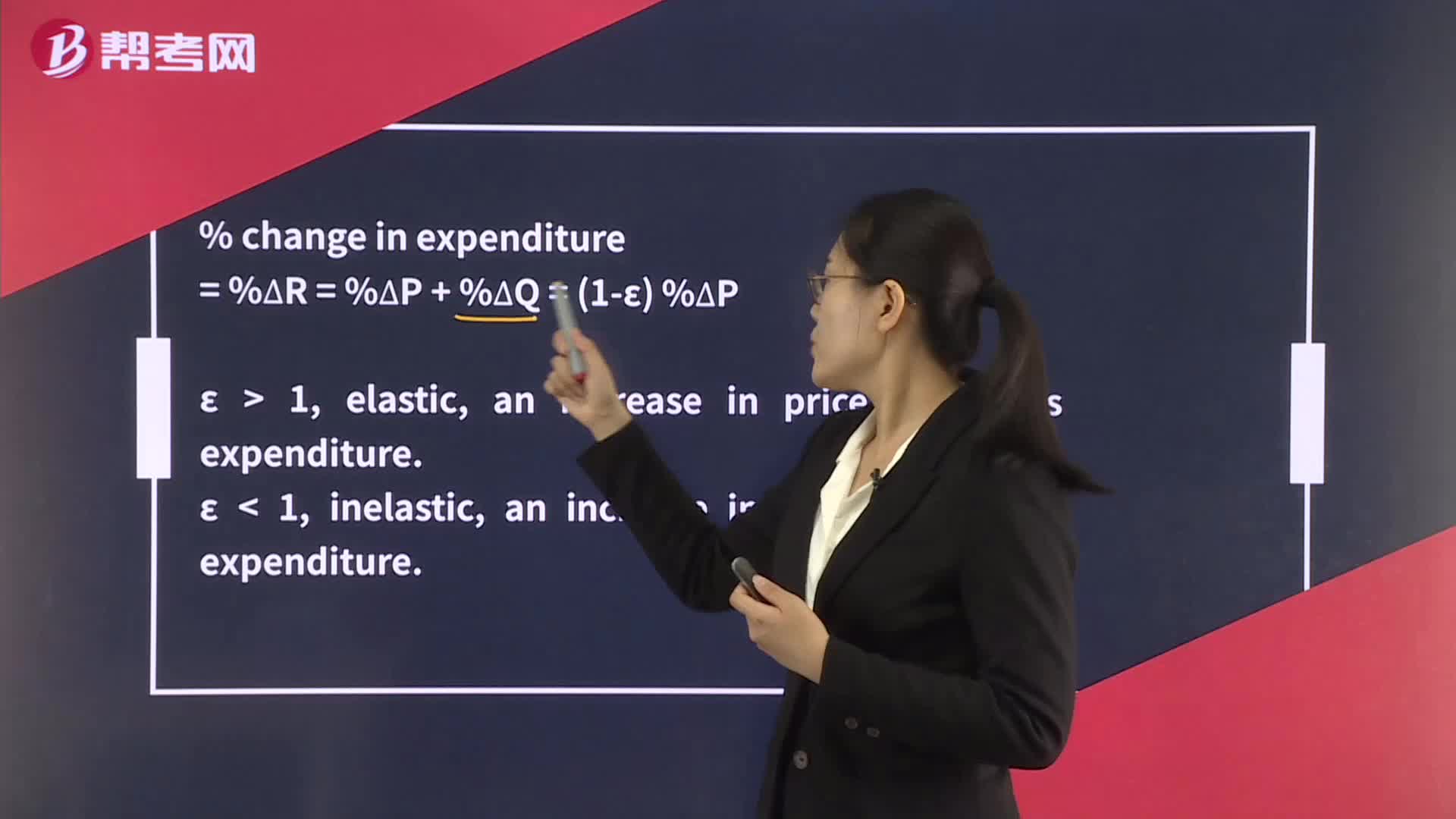
= %∆R = %∆P + %∆Q = 1-ε∆P,price increases expenditure.:The Marshall–Lernerconditionrespectively.Exchange rate changes will be a more-effectiveeffect
The Elasticities Approach is a method used in economics to measure the responsiveness of demand or supply to changes in price or income. It is based on the concept of elasticity, which is a measure of the degree to which the quantity demanded or supplied of a good or service changes in response to a change in its price or income.
The Elasticities Approach involves calculating the price elasticity of demand (PED), income elasticity of demand (YED), and cross-price elasticity of demand (XED) for a particular product or service. These measurements help to determine how sensitive consumers are to changes in price or income, and how the demand for one product is affected by changes in the price of another product.
The PED measures the percentage change in quantity demanded in response to a one percent change in price. A product is considered to be price elastic if the PED is greater than one, indicating that consumers are highly responsive to price changes. A product is considered to be price inelastic if the PED is less than one, indicating that consumers are less sensitive to price changes.
The YED measures the percentage change in quantity demanded in response to a one percent change in income. A product is considered to be income elastic if the YED is greater than one, indicating that demand for the product increases as income increases. A product is considered to be income inelastic if the YED is less than one, indicating that demand for the product is not strongly influenced by changes in income.
The XED measures the percentage change in quantity demanded of one product in response to a one percent change in the price of another product. A product is considered to be a substitute if the XED is positive, indicating that demand for the product increases when the price of a substitute product increases. A product is considered to be a complement if the XED is negative, indicating that demand for the product increases when the price of a complementary product decreases.
The Elasticities Approach is useful for businesses and policymakers to understand how changes in price and income affect the demand for their products and services. By understanding the elasticity of demand, businesses can adjust their pricing and marketing strategies to maximize profits. Policymakers can also use this approach to design policies that promote economic growth and stability.
CFA考试视频The Elasticities ApproachCFA一级视频