Income Elasticity of Demand
365 播放时长:32
加载播放器...
elasticity of demand
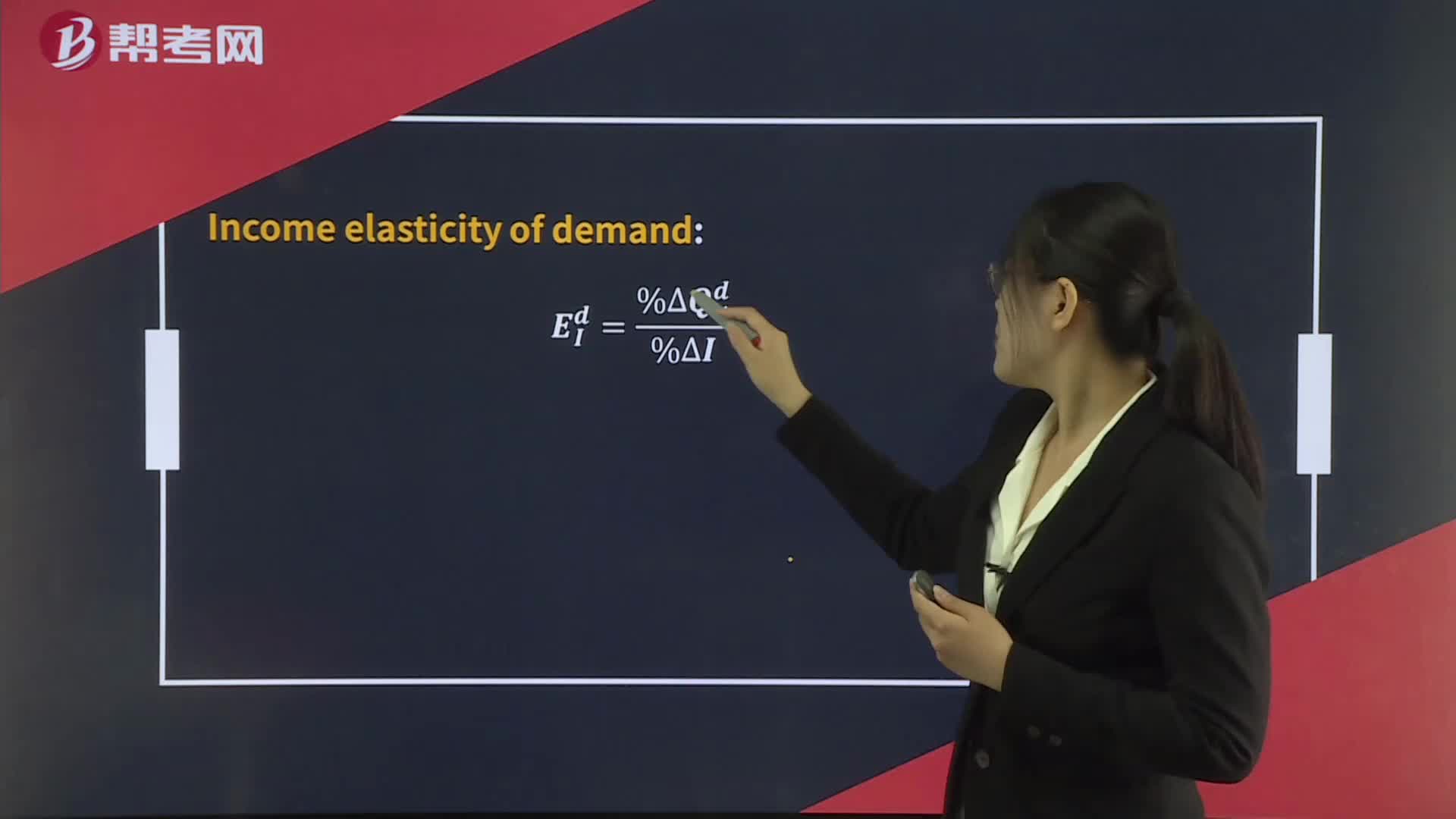
Income elasticity of demand is a measure of the responsiveness of the quantity demanded of a good or service to changes in income, ceteris paribus. It is calculated as the percentage change in quantity demanded divided by the percentage change in income.
If income elasticity of demand is positive, it means that the good is a normal good, and as income increases, the quantity demanded of the good also increases. If income elasticity of demand is negative, it means that the good is an inferior good, and as income increases, the quantity demanded of the good decreases.
The magnitude of income elasticity of demand indicates the degree of responsiveness of quantity demanded to changes in income. If income elasticity of demand is greater than one, it means that the good is a luxury good, and as income increases, the quantity demanded of the good increases at a faster rate than income. If income elasticity of demand is less than one, it means that the good is a necessity, and as income increases, the quantity demanded of the good increases at a slower rate than income.
CFA考试视频Income Elasticity of DemandCFA一级视频


