Balance of Payment Components
436 播放时长:304
加载播放器...
1 Merchandise trade.;transportation,engineering,goldand foreign liabilities reported by the reporting country’s banking sector.
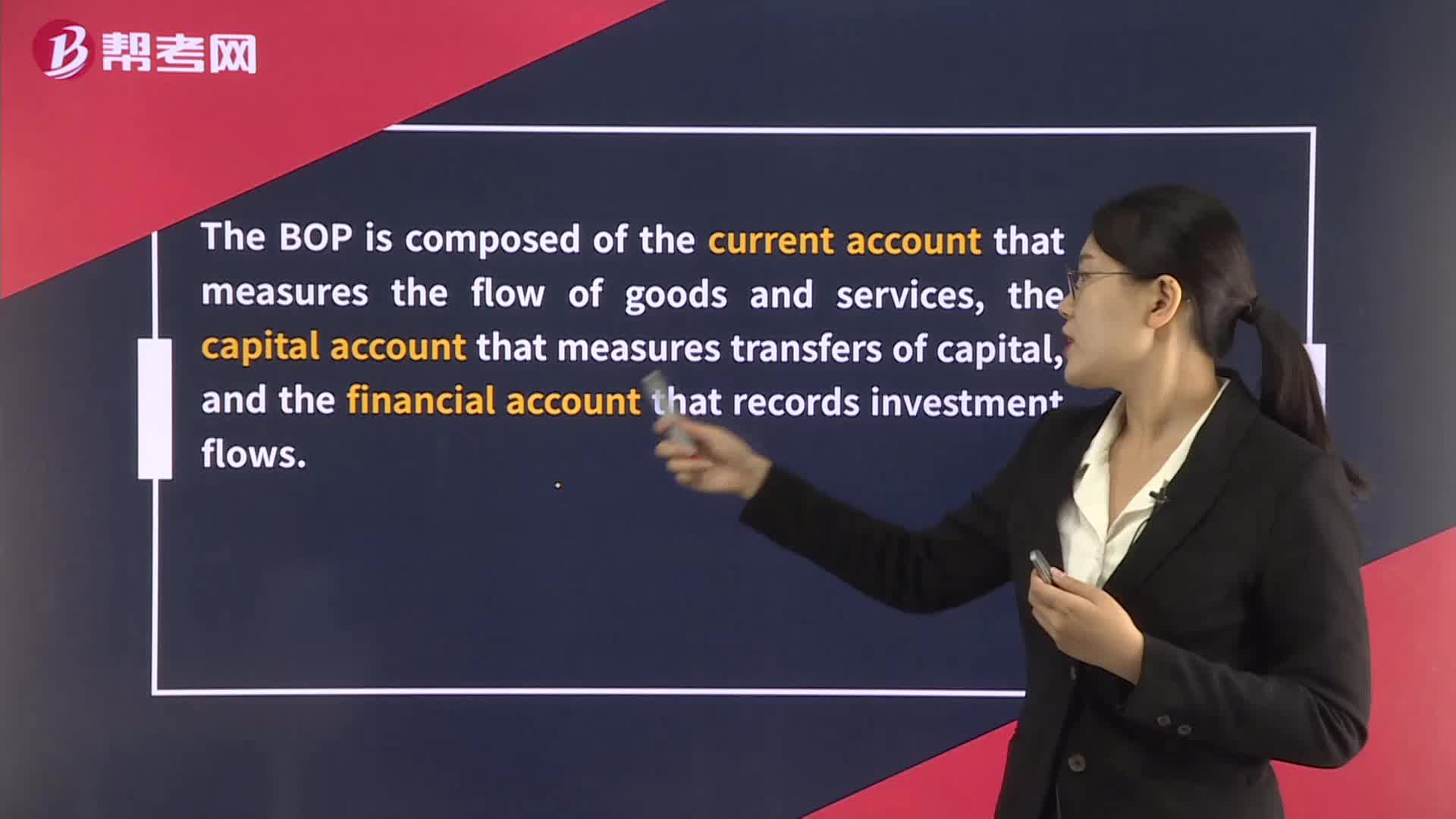
The balance of payments (BOP) is a statement that summarizes all economic transactions between a country and the rest of the world during a given period of time. It is divided into three major components:
1. Current account: This includes all transactions related to the trade of goods and services, income from investments, and unilateral transfers such as foreign aid and remittances. A surplus in the current account indicates that a country is exporting more than it is importing and is receiving more income than it is paying out.
2. Capital account: This includes all transactions related to the purchase and sale of assets, such as stocks, bonds, and real estate, between a country and the rest of the world. A surplus in the capital account indicates that a country is receiving more investment from abroad than it is investing abroad.
3. Financial account: This includes all transactions related to the movement of financial assets, such as currency, bank deposits, and loans, between a country and the rest of the world. A surplus in the financial account indicates that a country is receiving more financial inflows than outflows.
Overall, the balance of payments must balance, meaning that the sum of the current account, capital account, and financial account must equal zero. If there is a deficit in one component, it must be offset by a surplus in another component.
CFA考试视频Balance of Payment ComponentsCFA一级视频


