Currency Regimes – Active and Passive Crawling Pegs
387 播放时长:93
加载播放器...
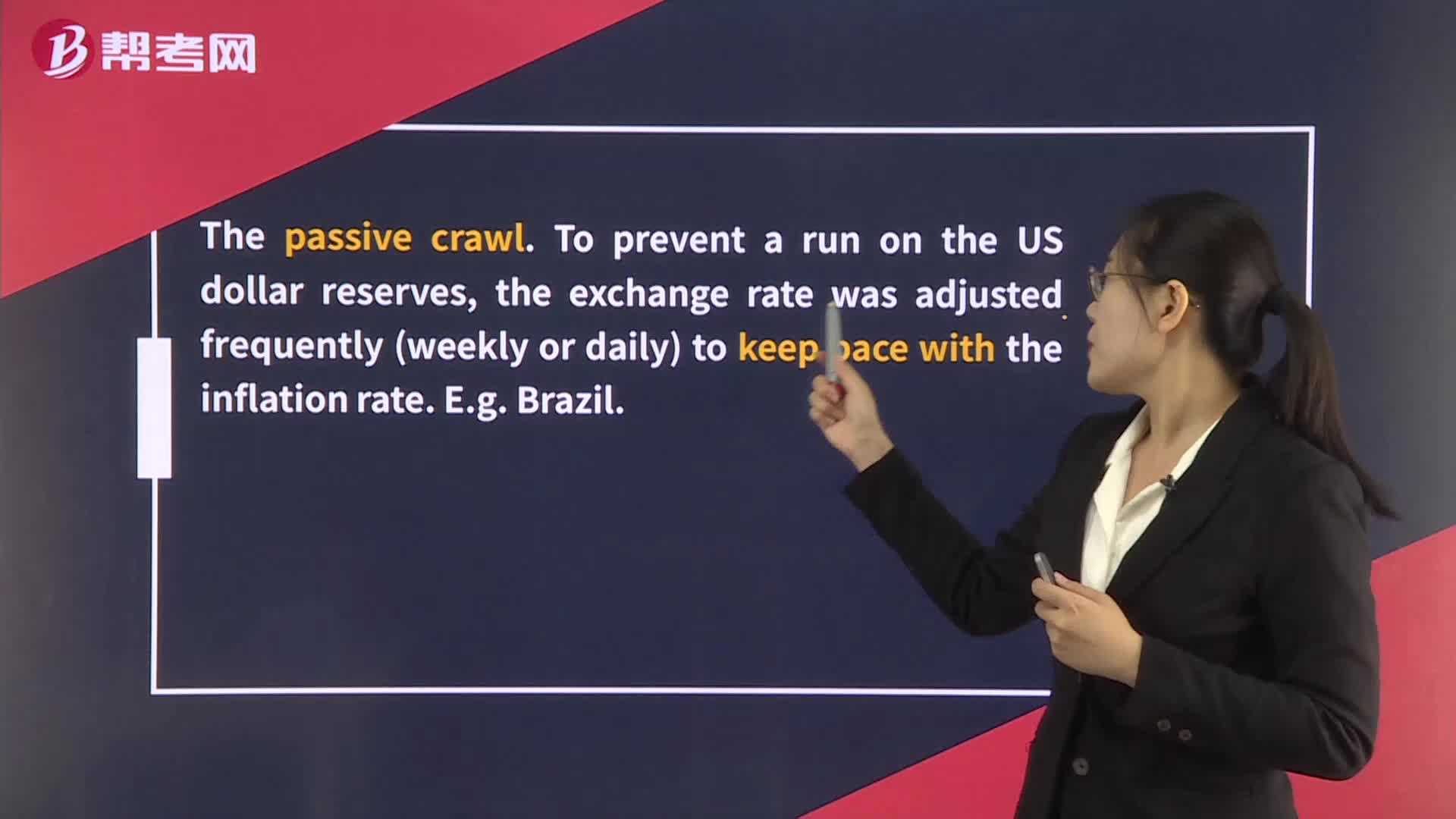
adjusted frequently weekly or daily to keep:ChileAimto manipulate expectations of inflation.
Active and passive crawling pegs are two types of currency regimes used by countries to manage their exchange rates.
Active crawling pegs involve frequent adjustments to the exchange rate by the central bank to maintain a specific target rate. The central bank actively intervenes in the foreign exchange market by buying or selling its currency to keep the exchange rate within a certain range. This type of regime is often used in countries with high inflation rates or unstable economies.
Passive crawling pegs, on the other hand, involve less frequent adjustments to the exchange rate. The central bank sets a target rate and allows the exchange rate to fluctuate within a certain range. However, if the exchange rate moves outside of this range, the central bank will intervene to bring it back within the target range. This type of regime is often used in countries with more stable economies.
Both active and passive crawling pegs have advantages and disadvantages. Active crawling pegs allow for greater control over the exchange rate, but can be costly and may lead to currency speculation. Passive crawling pegs are less costly and more flexible, but may be less effective in controlling the exchange rate. Ultimately, the choice of currency regime depends on a country's economic goals and circumstances.
Active crawling pegs involve frequent adjustments to the exchange rate by the central bank to maintain a specific target rate. The central bank actively intervenes in the foreign exchange market by buying or selling its currency to keep the exchange rate within a certain range. This type of regime is often used in countries with high inflation rates or unstable economies.
Passive crawling pegs, on the other hand, involve less frequent adjustments to the exchange rate. The central bank sets a target rate and allows the exchange rate to fluctuate within a certain range. However, if the exchange rate moves outside of this range, the central bank will intervene to bring it back within the target range. This type of regime is often used in countries with more stable economies.
Both active and passive crawling pegs have advantages and disadvantages. Active crawling pegs allow for greater control over the exchange rate, but can be costly and may lead to currency speculation. Passive crawling pegs are less costly and more flexible, but may be less effective in controlling the exchange rate. Ultimately, the choice of currency regime depends on a country's economic goals and circumstances.
CFA考试视频Currency Regimes – Active and Passive Crawling PegsCFA一级视频