Futures Contracts vs.OTC Forward Contracts
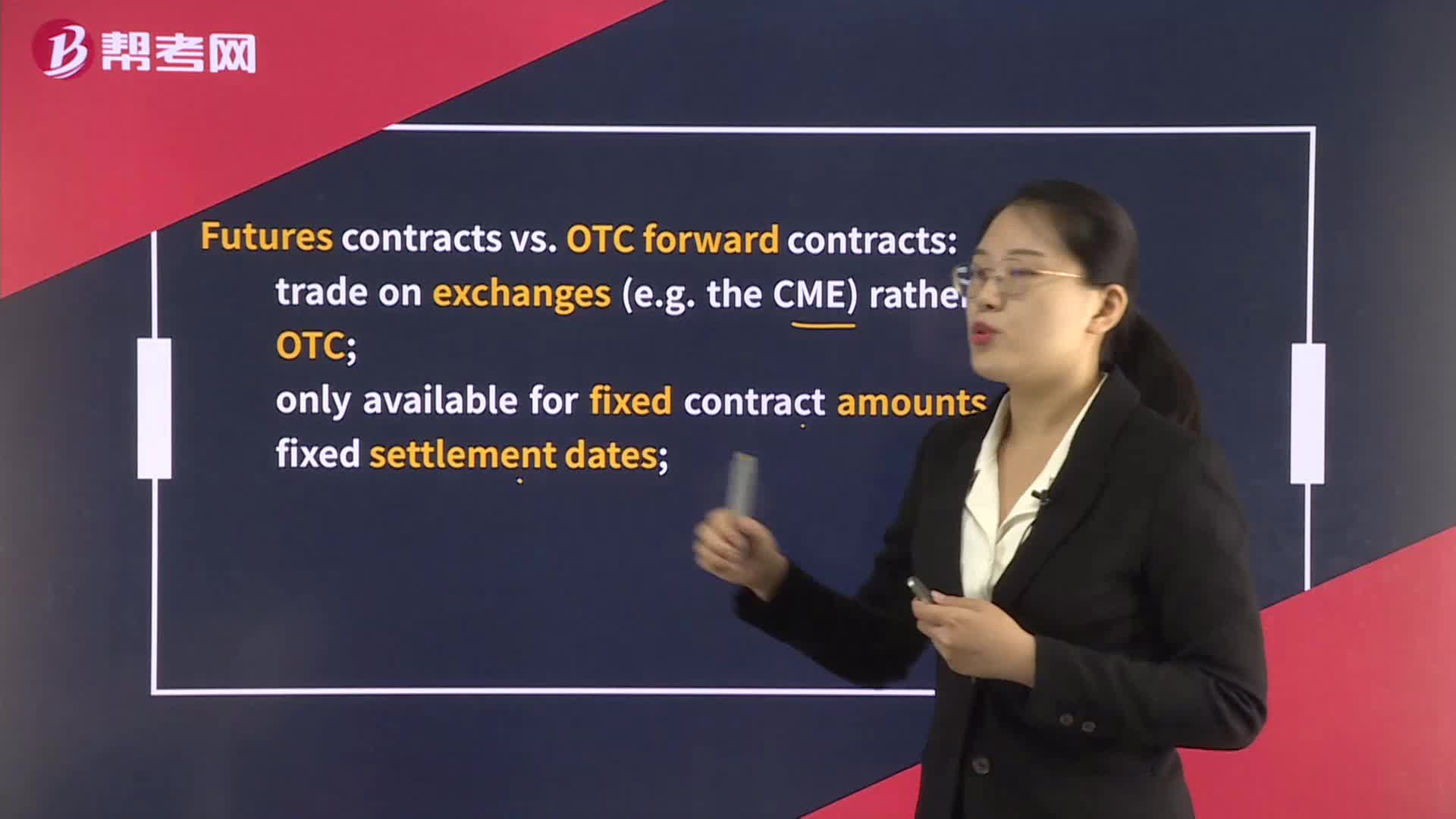
Futures contracts and OTC (over-the-counter) forward contracts are both financial instruments used for hedging against price fluctuations in various commodities, currencies, and securities. However, there are some key differences between the two.
1. Trading Platform: Futures contracts are traded on a centralized exchange, while OTC forward contracts are traded directly between two parties.
2. Standardization: Futures contracts are standardized in terms of contract size, delivery date, and quality of the underlying asset, while OTC forward contracts can be customized based on the specific needs of the parties involved.
3. Margin Requirements: Futures contracts require margin payments from both parties to ensure that they can meet their obligations, while OTC forward contracts do not require margin payments.
4. Counterparty Risk: Futures contracts are guaranteed by the exchange, which acts as a counterparty to both parties, while OTC forward contracts are subject to counterparty risk, as they are only between two parties.
5. Liquidity: Futures contracts are generally more liquid than OTC forward contracts, as they are traded on a centralized exchange and can be easily bought or sold.
6. Settlement: Futures contracts are settled on a daily basis, while OTC forward contracts are settled on the maturity date.
Overall, futures contracts are more standardized, more liquid, and offer less counterparty risk than OTC forward contracts. However, OTC forward contracts offer more flexibility and can be customized to meet the specific needs of the parties involved.
 帮考网校
帮考网校