Elliott Wave Theory
358 播放时长:382
加载播放器...
repeated waves or cycles.:Intermediate,[PracticeB.C.[Solutions] B
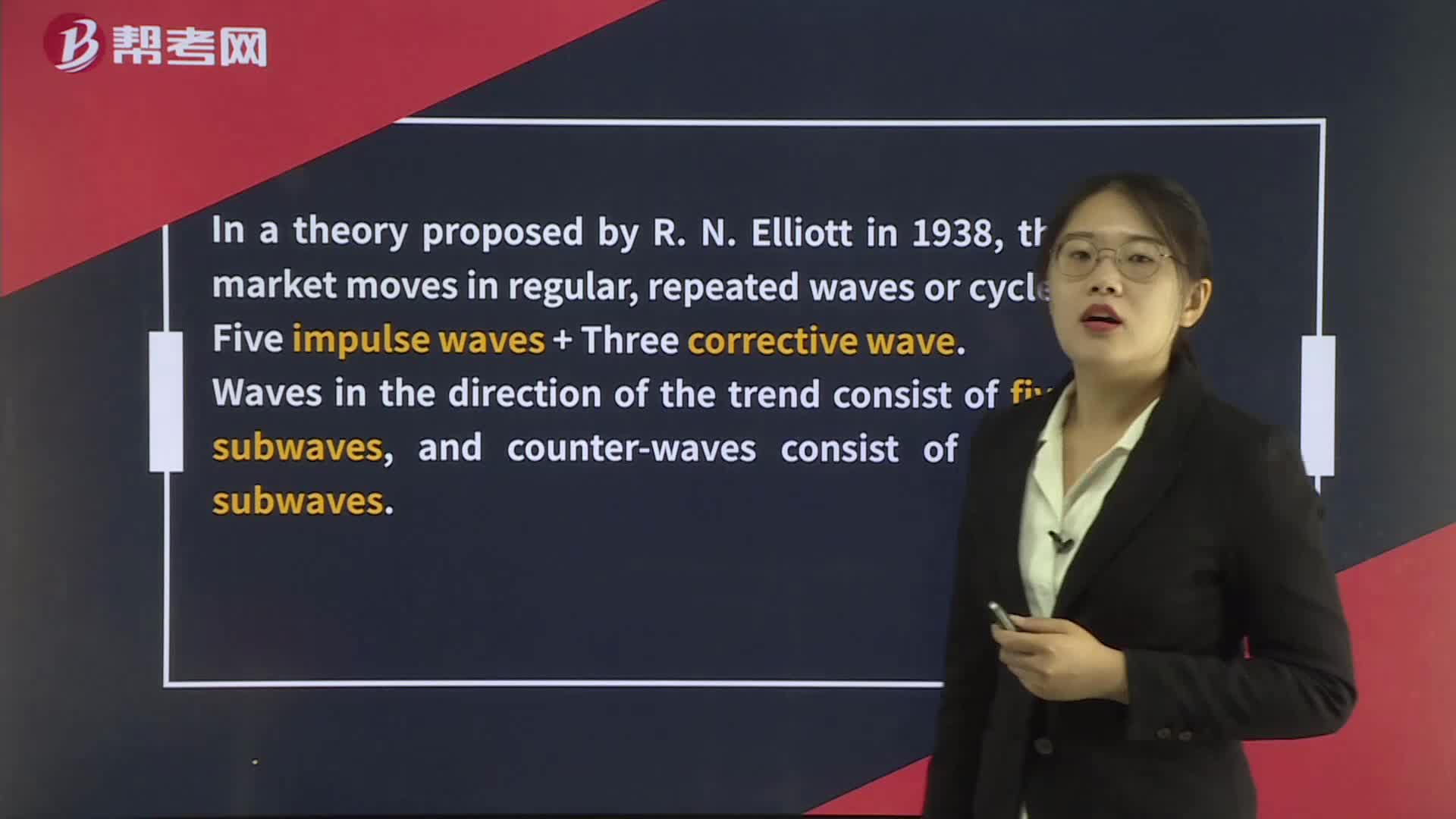
Elliott Wave Theory is a technical analysis approach to forecasting price movements in financial markets. It is based on the idea that markets move in predictable patterns, which can be identified and analyzed using a set of rules and guidelines.
The theory was developed by Ralph Nelson Elliott in the 1930s, who observed that stock prices moved in a series of waves. He believed that these waves represented the natural rhythm of market psychology, and that by analyzing them, traders could predict future market movements.
According to Elliott, there are two types of waves: impulsive waves and corrective waves. Impulsive waves move in the direction of the trend, while corrective waves move against the trend. Impulsive waves are composed of five smaller waves, while corrective waves are composed of three smaller waves.
Elliott also identified several rules and guidelines for analyzing waves, including the idea that wave 2 never retraces more than 100% of wave 1, and that wave 4 never retraces more than 100% of wave 3.
Elliott Wave Theory is controversial among traders, with some believing it to be a powerful tool for predicting market movements, while others view it as subjective and unreliable. Despite this, it remains a popular approach to technical analysis, particularly among forex traders.
CFA考试视频Elliott Wave TheoryCFA一级视频