Symmetry, Skewness, Kurtosis
363 播放时长:644
加载播放器...
Symmetry,distribution,[Practice:A. For:C.[Practicereturns.C.
Symmetry, skewness, and kurtosis are statistical measures that describe the shape of a distribution.
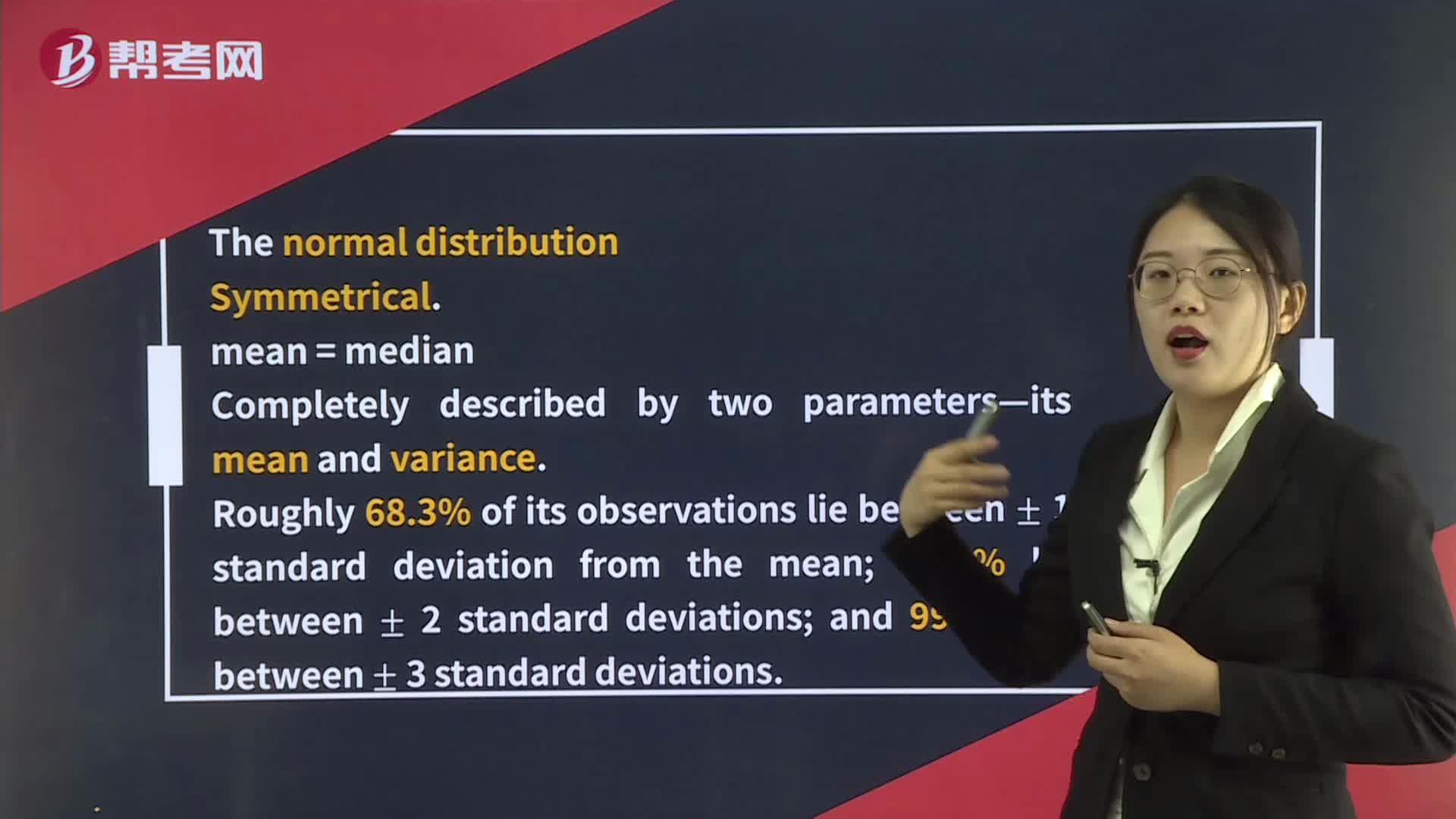
Symmetry refers to the extent to which a distribution is evenly balanced around its center. A distribution is said to be symmetric if it has the same shape on both sides of its center. A normal distribution is a classic example of a symmetric distribution.
Skewness measures the degree of asymmetry in a distribution. If a distribution is skewed to the right, it means that it has a longer tail on the right side and the bulk of the distribution is on the left side. If a distribution is skewed to the left, it means that it has a longer tail on the left side and the bulk of the distribution is on the right side.
Kurtosis measures the degree of peakedness or flatness in a distribution. A distribution with high kurtosis has a sharp peak and heavy tails, while a distribution with low kurtosis is relatively flat and has lighter tails. A normal distribution has a kurtosis of 0, indicating that it is neither peaked nor flat.
These measures are important in statistical analysis as they provide information about the distribution of data and can help identify potential outliers or anomalies.
CFA考试视频SymmetrySkewnessKurtosisCFA一级视频