Theories of the Business Cycle - Monetarist School
431 播放时长:158
加载播放器...
Theories of:boom,consider the long-term costs of government intervention e.g.continue to grow at a moderate rate.
The Monetarist School is a theory of the business cycle that emphasizes the role of monetary policy in stabilizing the economy. This theory is based on the idea that fluctuations in the money supply have a direct impact on the level of economic activity.
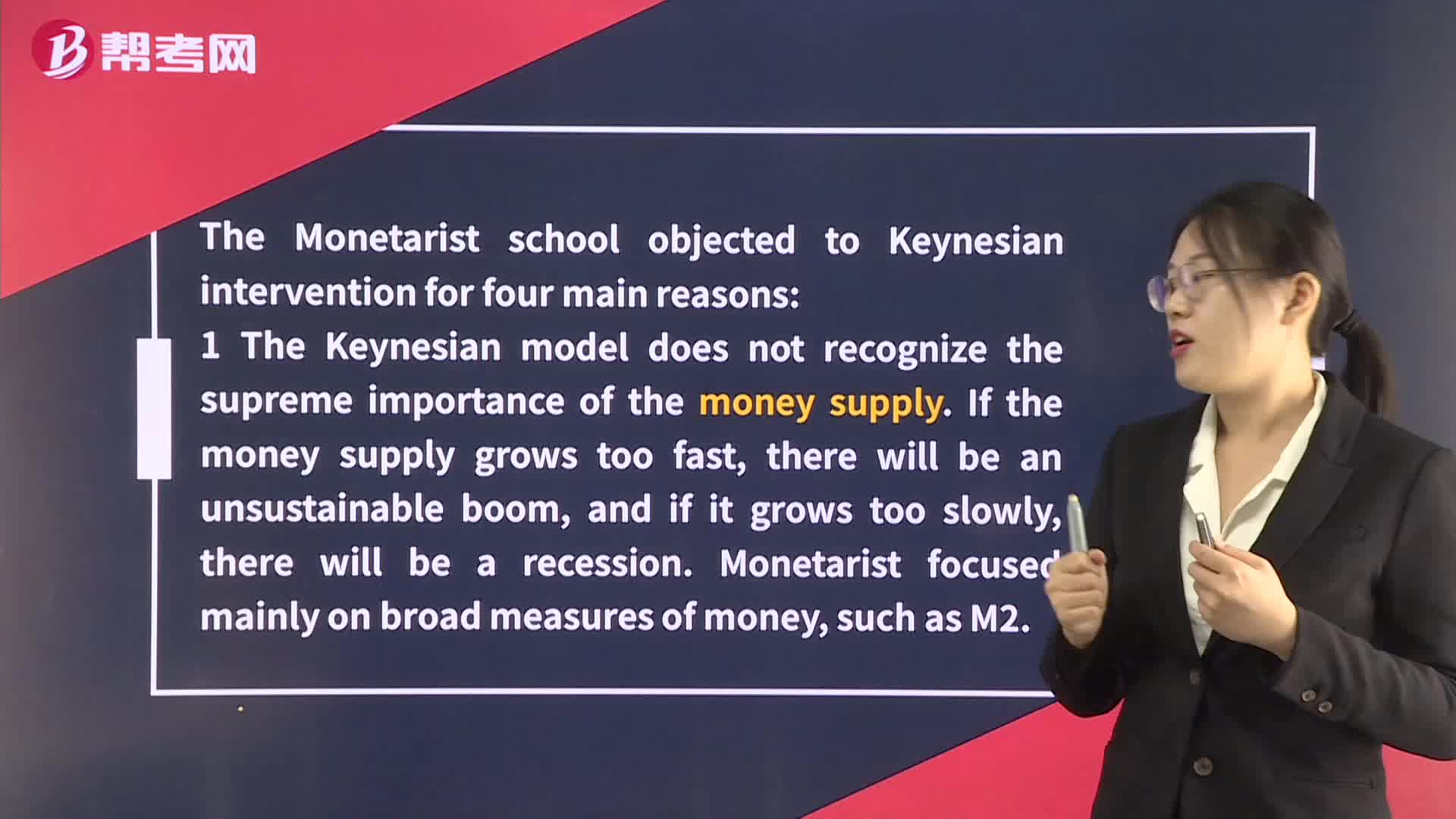
According to Monetarist theory, the business cycle is primarily caused by fluctuations in the money supply. When the money supply increases, interest rates decrease, making it easier for businesses and consumers to borrow money. This leads to an increase in investment and consumer spending, which stimulates economic growth.
However, as the economy grows, inflationary pressures begin to build. To combat inflation, the central bank will decrease the money supply, which raises interest rates and reduces borrowing. This leads to a decrease in investment and consumer spending, which slows economic growth.
The Monetarist School believes that the key to stabilizing the business cycle is to maintain a stable and predictable growth rate in the money supply. By doing so, the central bank can avoid the boom and bust cycles that often result from erratic monetary policy.
Critics of Monetarist theory argue that it oversimplifies the complex factors that contribute to the business cycle, such as changes in technology, demographics, and international trade. They also argue that Monetarist policies can lead to a focus on short-term economic stability at the expense of long-term growth and development.
CFA考试视频Theories of the Business Cycle - Monetarist SchoolCFA一级视频