What are the basic principles of capital budgeting?
512 播放时长:529
加载播放器...
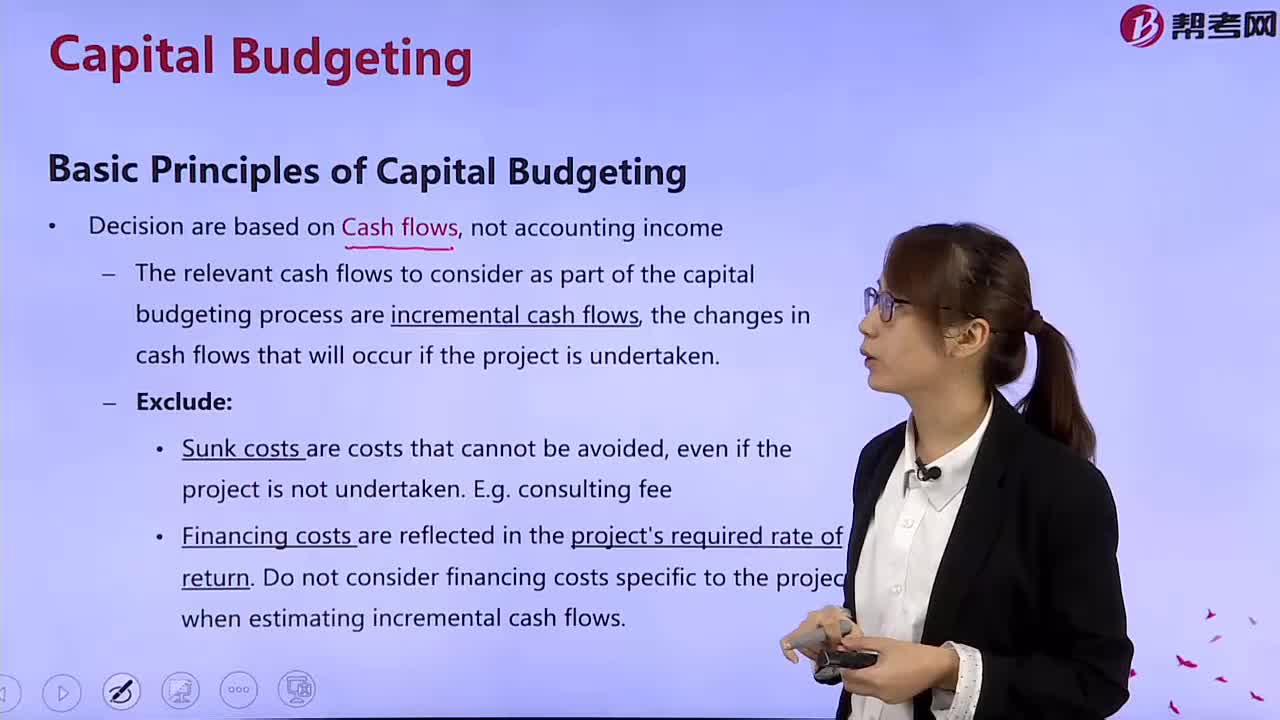
What are the basic principles of capital budgeting?
The basic principles of capital budgeting are:
1. Investment Evaluation: Capital budgeting involves evaluating potential investment opportunities and selecting the ones that will provide the highest returns.
2. Cash Flow Analysis: The focus is on cash flows, not accounting profits. The analysis should consider all cash inflows and outflows associated with the investment.
3. Time Value of Money: The time value of money principle recognizes that a dollar received today is worth more than a dollar received in the future. Therefore, future cash flows must be discounted to their present value.
4. Risk Analysis: Risk analysis is an essential component of capital budgeting. The expected returns and risks associated with each investment opportunity should be analyzed and compared.
5. Capital Rationing: Capital rationing is the process of allocating capital to the most profitable projects when there are limited funds available.
6. Incremental Cash Flows: Incremental cash flows are the cash flows that result from a particular investment, and they should be analyzed separately from the cash flows of the entire firm.
7. Opportunity Cost: The opportunity cost of capital is the return that could be earned on the next best investment opportunity with similar risks.
8. Payback Period: The payback period is the amount of time it takes for the initial investment to be recovered from the cash flows generated by the investment.
9. Net Present Value: Net present value is the difference between the present value of cash inflows and the present value of cash outflows. If the NPV is positive, the investment is considered profitable.
CFA考试视频CFA一级视频What are the basic principles of capital budgeting?


