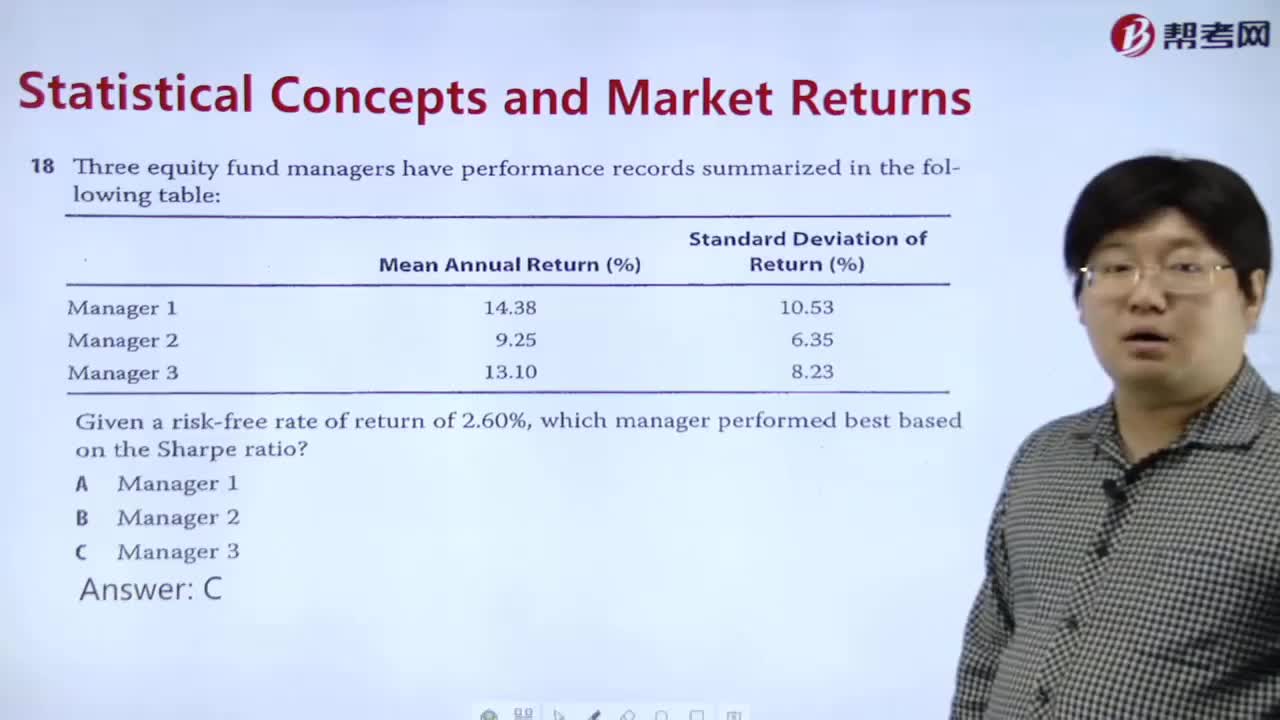
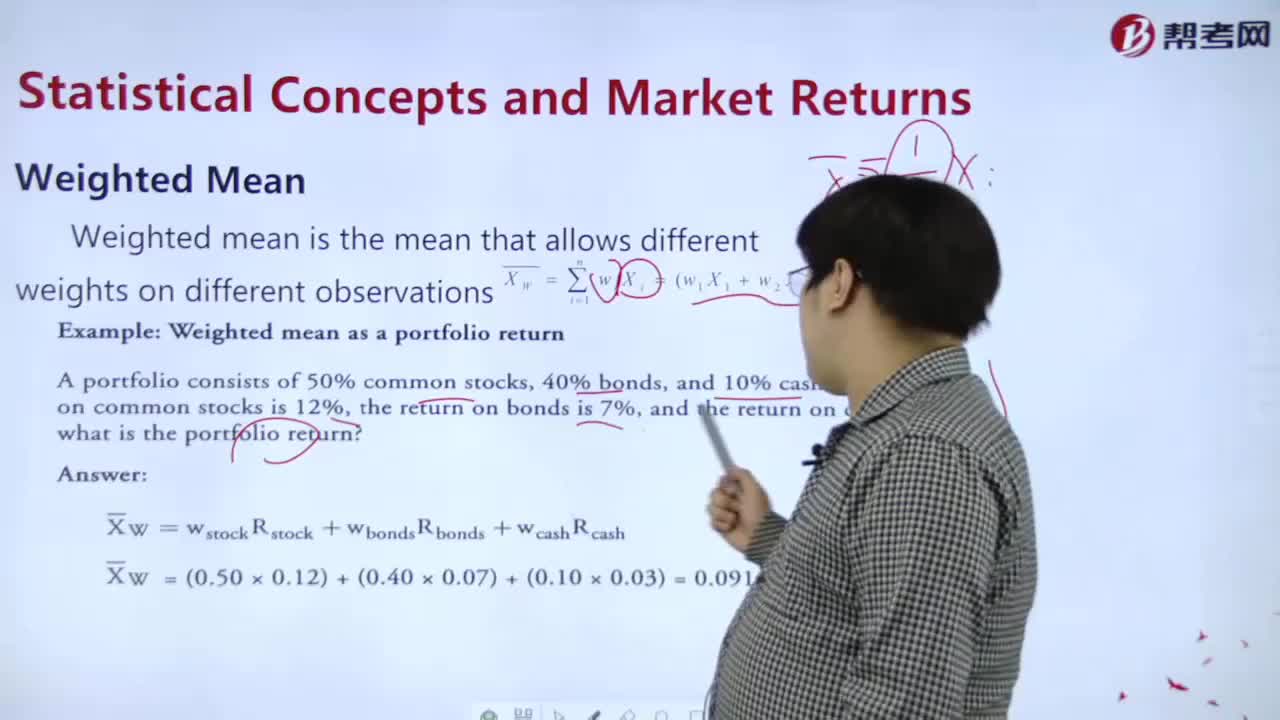
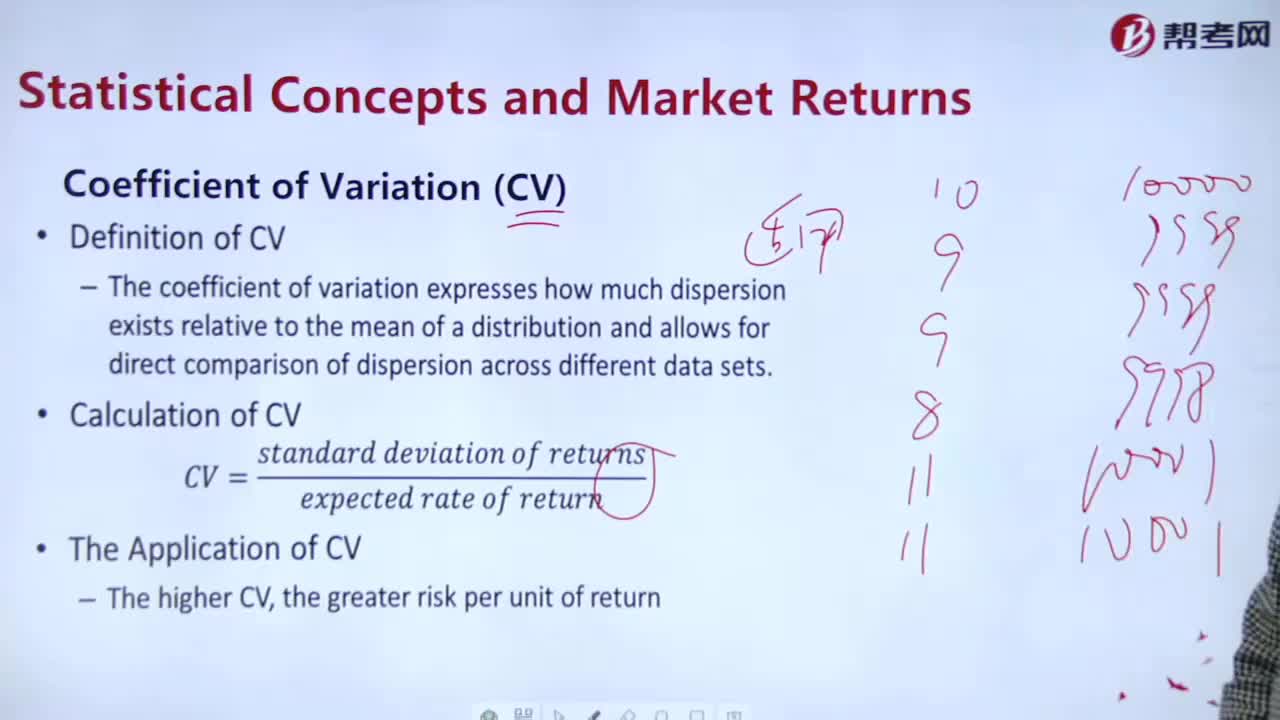
Fundamental Concepts of Statistics
452 播放时长:462
加载播放器...
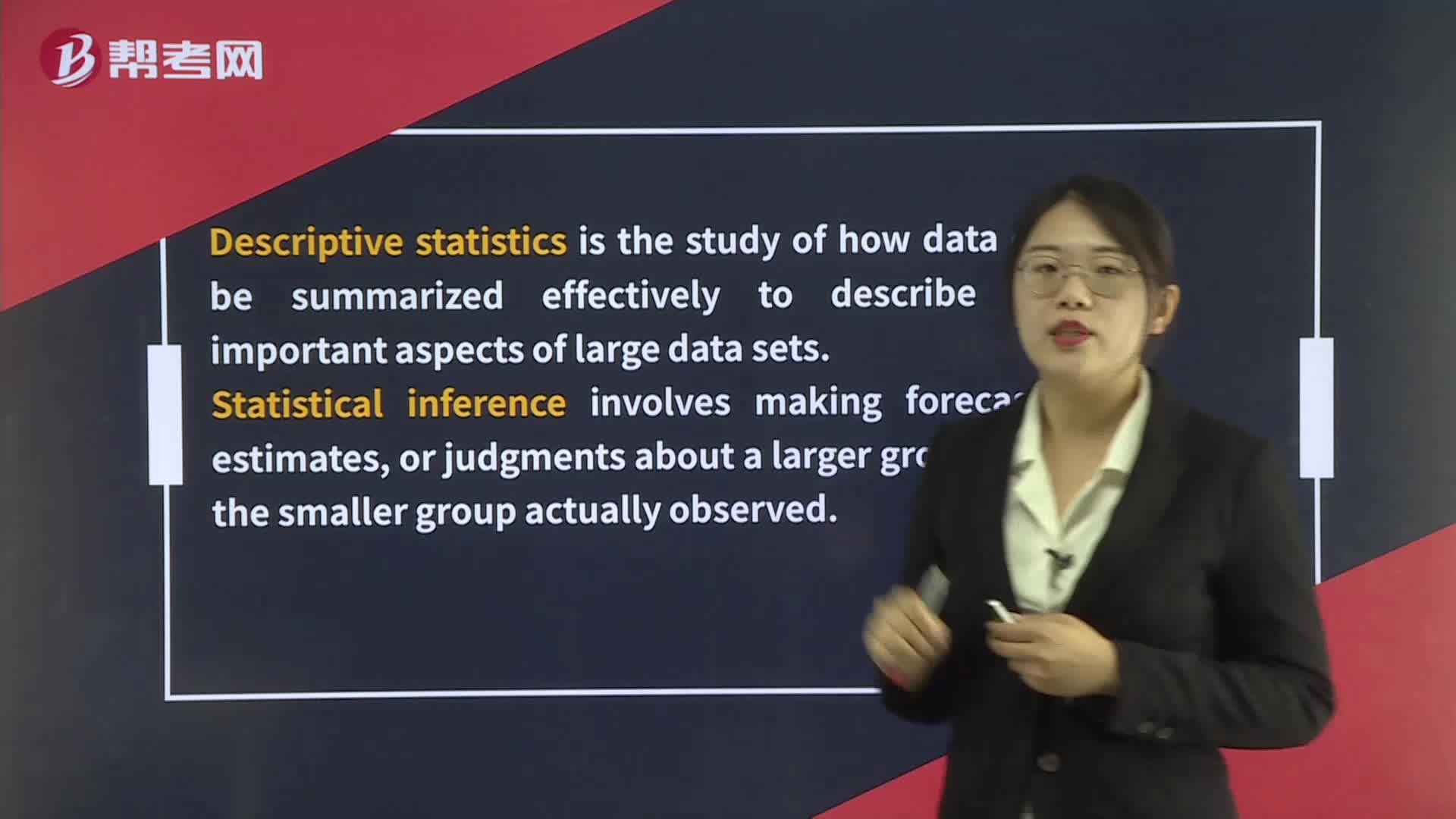
estimates:sample.[PracticeB.IntervalC.and so on.
1. Population: The entire group of individuals or objects that we want to study.
2. Sample: A subset of the population that is selected for study.
3. Variable: A characteristic or attribute that can take different values for different individuals or objects.
4. Data: The values of the variables for the individuals or objects in the sample.
5. Descriptive statistics: Methods used to summarize and describe the data.
6. Inferential statistics: Methods used to make inferences about the population based on the sample data.
7. Parameter: A numerical summary of a population.
8. Statistic: A numerical summary of a sample.
9. Sampling: The process of selecting a sample from a population.
10. Probability: The chance of an event occurring.
11. Probability distribution: A mathematical function that describes the probabilities of different outcomes in a random experiment.
12. Hypothesis testing: A method used to test a hypothesis about a population parameter based on sample data.
13. Confidence interval: An interval estimate of a population parameter based on sample data.
14. Correlation: A measure of the strength and direction of the linear relationship between two variables.
15. Regression: A method used to model the relationship between a dependent variable and one or more independent variables.
CFA考试视频Fundamental Concepts of StatisticsCFA一级视频