Type I and Type II Errors in Hypothesis Testing
467 播放时长:171
加载播放器...
all else equal.
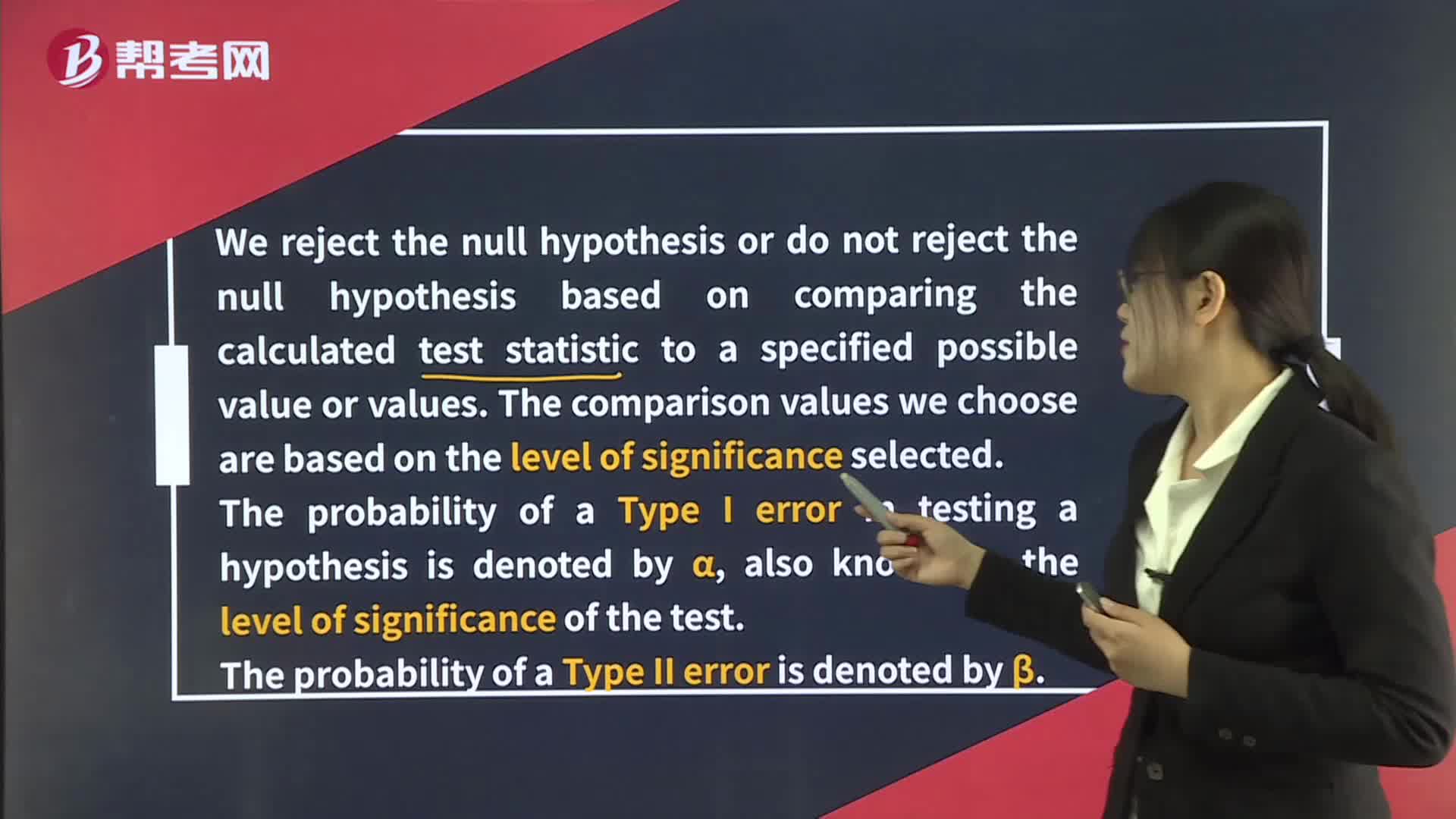
In hypothesis testing, there are two types of errors that can occur: Type I and Type II errors.
Type I Error: A Type I error occurs when a null hypothesis is rejected when it is actually true. This means that the researcher concludes that there is a significant difference between the two groups being compared when there is actually no difference. The probability of making a Type I error is denoted by α (alpha) and is usually set at 0.05 or 0.01.
For example, if a researcher concludes that a new drug is effective in treating a disease when it is actually not effective, this is a Type I error.
Type II Error: A Type II error occurs when a null hypothesis is not rejected when it is actually false. This means that the researcher concludes that there is no significant difference between the two groups being compared when there is actually a difference. The probability of making a Type II error is denoted by β (beta).
For example, if a researcher concludes that a new drug is not effective in treating a disease when it is actually effective, this is a Type II error.
The probability of making a Type II error is affected by several factors, including the sample size, the level of significance, and the effect size. Increasing the sample size or decreasing the level of significance can decrease the probability of making a Type II error. Increasing the effect size can also decrease the probability of making a Type II error.
CFA考试视频Type I and Type II Errors in Hypothesis TestingCFA一级视频


