下载亿题库APP
联系电话:400-660-1360
下载亿题库APP
联系电话:400-660-1360

请谨慎保管和记忆你的密码,以免泄露和丢失
请谨慎保管和记忆你的密码,以免泄露和丢失

小伙伴们,今天的你有没有好好复习呢?下面,帮考网为大家准备了一些关于托福考试的习题,供大家练习,希望能够对大家有所帮助。一起来看!
In July of 1994, an astounding series of events took place. The world anxiously watched as, every few hours, a hurtling chunk of comet plunged into the atmosphere of Jupiter. All of the twenty-odd fragments, collectively called comet Shoemaker-Levy 9 after its discoverers, were once part of the same object, now dismembered and strung out along the same orbit. This cometary train, glistening like a string of pearls, had been first glimpsed only a few months before its fateful impact with Jupiter, and rather quickly scientists had predicted that the fragments were on a collision course with the giant planet. The impact caused an explosion clearly visible from Earth, a bright flaming fire that quickly expanded as each icy mass incinerated itself. When each fragment slammed at 60 kilometers per second into the dense atmosphere, its immense kinetic energy was transformed into heat, producing a superheated fireball that was ejected back through the tunnel the fragment had made a few seconds earlier. The residues from these explosions left huge black marks on the face of Jupiter, some of which have stretched out to form dark ribbons.
Although this impact event was of considerable scientific import, it especially piqued public curiosity and interest. Photographs of each collision made the evening television newscast and were posted on the Internet. This was possibly the most open scientific endeavor in history. The face of the largest planet in the solar system was changed before our very eyes. And for the very first time, most of humanity came to fully appreciate the fact that we ourselves live on a similar target, a world subject to catastrophe by random assaults from celestial bodies. That realization was a surprise to many, but it should not have been. One of the great truths revealed by the last few decades of planetary exploration is that collisions between bodies of all sizes are relatively commonplace, at least in geologic terms, and were even more frequent in the early solar system.
1. The passage mentions which of the following with respect to the fragments of comet Shoemaker-Levy 9?
(A) They were once combine in a larger body.
(B) Some of them burned up before entering the atmosphere of Jupiter.
(C) Some of them are still orbiting Jupiter.
(D) They have an unusual orbit.
2. The word "collectively" in line 3 is closest in meaning to
(A) respectively
(B) popularly
(C) also
(D) together
3. The author compares the fragments of comet Shoemaker-Levy 9 to all of the following EXCEPT
(A) a dismembered body
(B) a train
(C) a pearl necklace
(D) a giant planet
4. Before comet Shoemaker-Levy 9 hit Jupiter in July 1994, scientists
(A) had been unaware of its existence
(B) had been tracking it for only a few months
(C) had observed its breakup into twenty-odd fragments
(D) had decided it would not collide with the planet
5. Before the comet fragments entered the atmosphere of Jupiter, they were most likely
(A) invisible
(B) black
(C) frozen
(D) exploding
6. Superheated fireballs were produced as soon as the fragments of comet Shoemaker- Levy 9
(A) hit the surface of Jupiter
(B) were pulled into Jupiter`s orbit
(C) were ejected back through the tunnel
(D) entered the atmosphere of Jupiter
7. The phrase "incinerated把。。。烧成灰 itself" in line 9 is closest in meaning to
(A) burned up
(B) broke into smaller pieces
(C) increased its speed
(D) grew in size
8. Which of the following is mentioned as evidence of the explosions that is still visible on Jupiter?
(A) fireballs
(B) ice masses
(C) black marks
(D) tunnels
9. Paragraph 2 discusses the impact of the comet Shoemaker-Levy 9 primarily in terms of
(A) its importance as an event of great scientific significance
(B) its effect on public awareness of the possibility of damage to Earth
(C) the changes it made to the surface of Jupiter
(D) the effect it had on television broadcasting
10. The "target" in line 20 most probably referred to
(A) Earth
(B) Jupiter
(C) the solar system
(D) a comet
答案:
ADDBC DACBA
以上就是本次帮考网和大家分享的全部内容了,好的成绩是坚持不懈的努力得来的,关注帮考网,还有更多有关托福考试的练习等着你哦!最后,帮考网祝各位考生考试顺利通过,取得好成绩!
 22
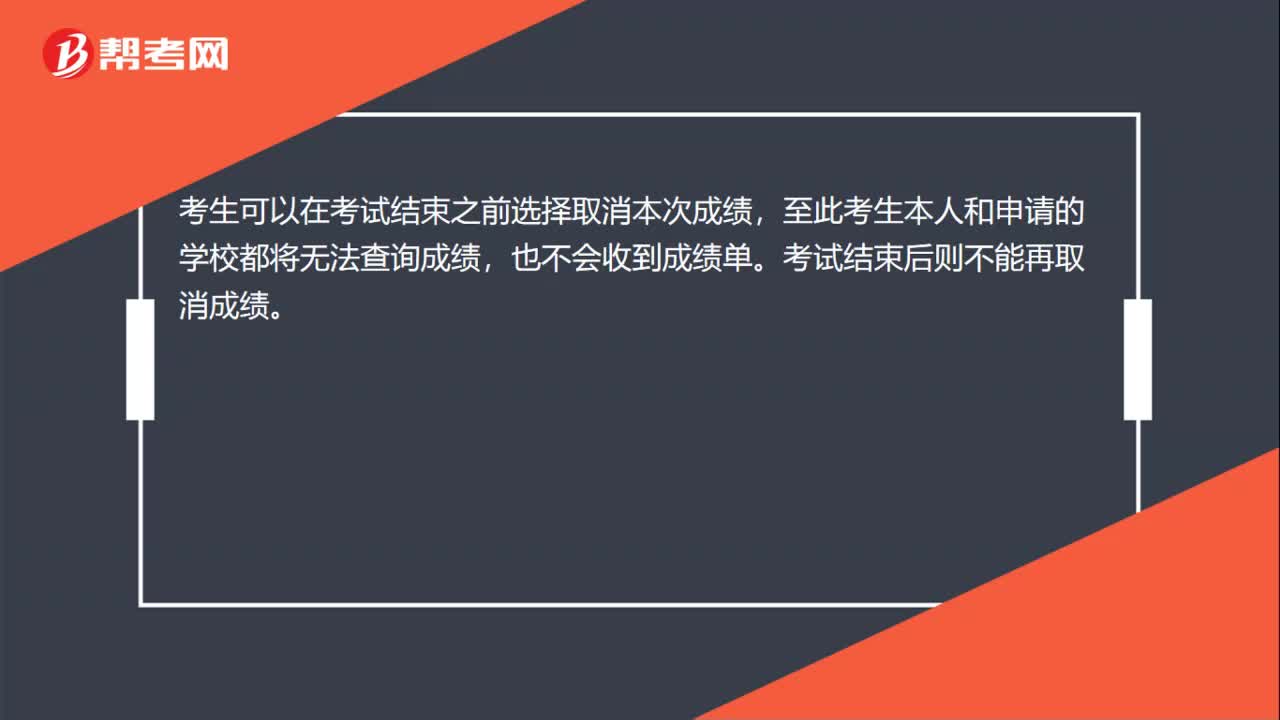
22托福考试中能否取消考试成绩?:托福考试中能否取消考试成绩?考生可以在考试结束之前选择取消本次成绩,至此考生本人和申请的学校都将无法查询成绩,也不会收到成绩单。考试结束后则不能再取消成绩。
 32
32托福考试如何计分?:托福考试如何计分?托福考试的四个环节,分数由电脑自动生成和人工评分(经过专业培训的权威人士)两部分组成,确保分数的公平及准确性。只有托福考试采用这种多人评分机制,通过不记名方式,由多名接受过严格培训的考官予以评分,过程经过质量监控,达到高标准的公平性与客观性。
 43
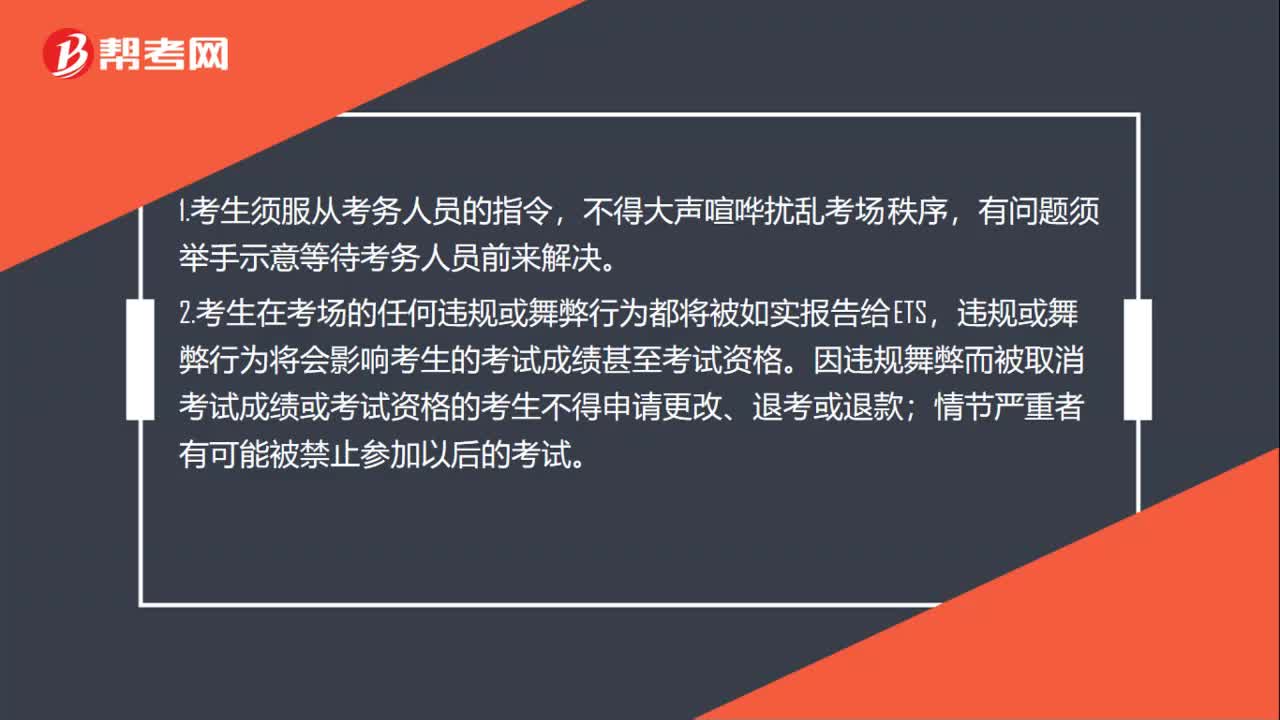
43托福考试的考场规则是什么?:托福考试的考场规则是什么?1.考生须服从考务人员的指令,不得大声喧哗扰乱考场秩序,有问题须举手示意等待考务人员前来解决。2.考生在考场的任何违规或舞弊行为都将被如实报告给ETS,违规或舞弊行为将会影响考生的考试成绩甚至考试资格。因违规舞弊而被取消考试成绩或考试资格的考生不得申请更改、退考或退款;情节严重者有可能被禁止参加以后的考试。